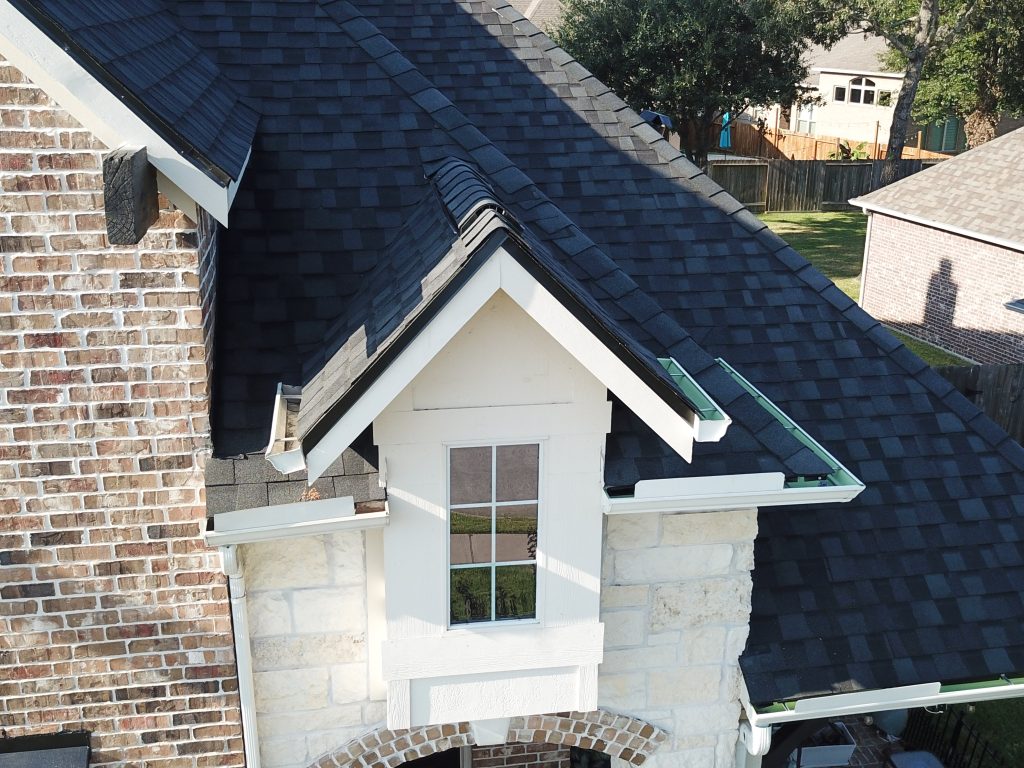
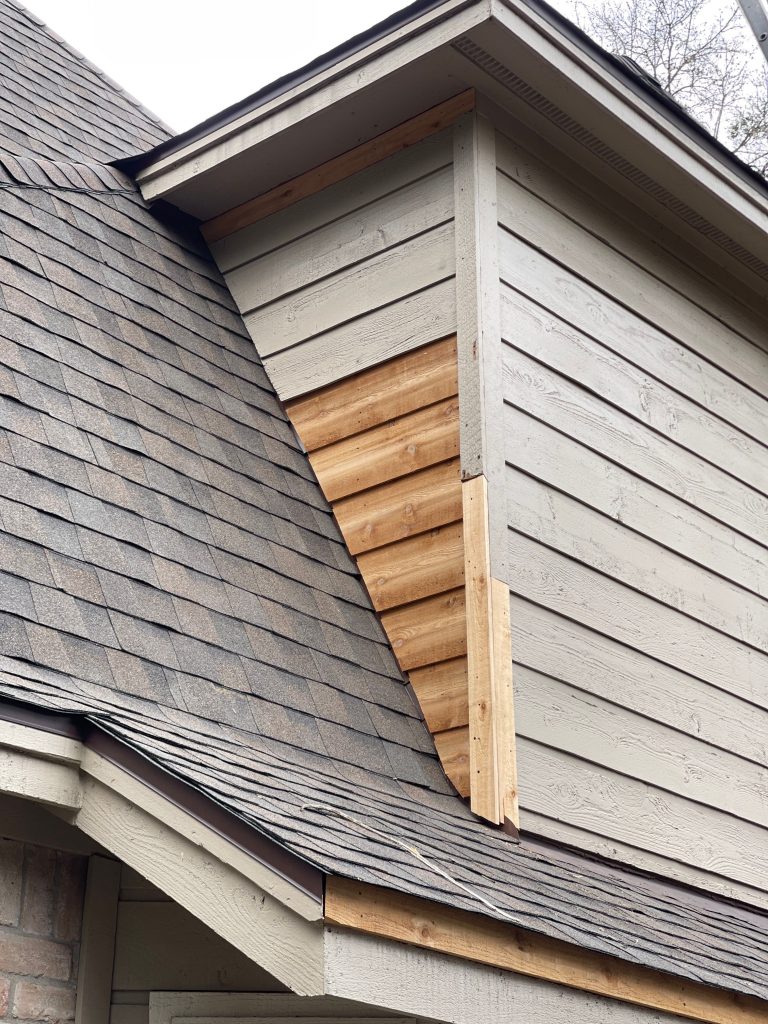
Handnail Roofing repairs and replaces siding, soffit and fascia on homes in Conroe, Spring, The Woodlands and the rest of Montgomery County, most often as part of a roof replacement or a storm repair. Andy Hughes, the owner, checks the walls while he inspects the roof, photographs what’s rotted or damaged, and sends a written price after measuring. The inspection is free.
Siding is on this site because the roof and the walls share their edges. Where a roof slope ends against a wall, where the soffit meets the eave, and below a gutter that has overflowed for years, roof problems turn into siding problems, and it’s usually the roofer who finds them.
Siding work that goes with a roof
Three jobs come up on nearly every roof replacement. First, rotted soffit and fascia at the eaves, easy to replace while the roof edge is open. Second, kickout flashing: where a lower roof runs into a taller wall, a small bent piece of metal at the bottom of the slope turns the water into the gutter. Many homes here were built without one, so water runs down inside the siding and the wall rots from the inside out. We add it with the new roof. Third, storm damage: the hail that bruised the shingles chipped the siding on the same side of the house, and both go on one claim.
What we repair and replace
Siding replacement
Full walls or the whole house, in fiber cement, engineered wood or vinyl. Rotted sheathing behind it gets replaced, not covered.
Siding repair
Cracked, chipped or wind-lifted boards swapped out and blended into the existing courses. If a patch will show, we say so before we start.
Soffit and fascia
New vented soffit panels and fascia board at the eaves, done with the roof so the drip edge, fascia and gutters end up in the right order.
Storm-damaged siding
Hail chips and wind damage documented alongside the roof for your insurance claim, then repaired with the roof.
Rot at windows and wall bottoms
The two places siding fails first in this climate. We open it up, replace what’s soft, flash it properly and re-side.
Painting and caulking
Cut ends primed, trim joints sealed with paintable caulk, and new siding painted to match, or a whole elevation repainted so the patch disappears.
Fiber cement, engineered wood or vinyl in Houston humidity
Fiber cement (HardiePlank). Cement, sand and cellulose pressed into boards. It doesn’t rot, termites ignore it, it doesn’t burn and it holds paint for years, which is why it’s the default around here. The trade-offs: it’s heavy, every cut end has to be sealed, and the caulk at trim joints needs attention every few years. Hardie makes a version for hot, humid climates, and that’s the one that belongs on a house in Montgomery County.
Engineered wood (LP SmartSide). Wood strands bonded with resin and treated against rot and termites. Lighter than fiber cement, longer boards so fewer joints, cuts like lumber and takes paint well. Its weak point is moisture at an unsealed edge. With every cut primed and the bottom edge kept off the slab, it does well here. Installed sloppy, it swells at the bottom within a few years.
Vinyl. The cheapest option and it never needs paint. But Texas sun fades and warps it, especially dark colors and walls that catch reflected sun off a neighbor’s windows, and hail cracks it. On a house you plan to keep, fiber cement is the better buy over ten years.
Why soffit matters more than it looks
The soffit is the underside of the eave, and on most homes it’s where the attic breathes in. A ridge vent can only pull hot air out if soffit vents let cooler air in at the bottom. Painted-over vents, solid panels or insulation stuffed into the eaves choke that intake, and the attic sits above 140 degrees all summer, cooking the shingles from underneath. When we replace soffit we use vented panels and clear the path behind them. It’s one of the cheapest fixes for attic ventilation, and it comes with the soffit job.
Rot at the bottom of walls and around windows
Siding rots where it stays wet. At the bottom of a wall, that means siding touching the slab, the dirt or the mulch, or a sprinkler head aimed at the house. The bottom course wicks water, the sheathing goes soft, and the paint bubbles a foot up the wall. We replace the rotted courses and sheathing and keep the new siding a couple of inches above a slab, more above dirt, so it can dry.
Around windows, the cause is usually failed caulk or missing flashing at the top of the trim. Water gets behind it, rots the sill and sheathing, and shows up as a soft spot under the window or a stain inside. The fix is to open the wall, replace what’s rotted, flash the window properly and re-side; caulking over it buys a season. Same where a roof meets a wall: without step flashing and a kickout, that siding goes first, so we check it on every roof repair.
Matching what’s already on the house
Lap siding comes in standard widths and textures, and we match the profile and exposure so the new courses line up with the old. Color is the honest problem: paint fades in Texas sun, so a new board in the old color reads darker for a season or two. On a back wall most people accept that. On the front, we’ll suggest repainting the whole elevation so there’s no patch to see, and price both ways.
What siding work costs
Siding is quoted after measuring, not over the phone. The number depends on the material, the square footage, how much rotted sheathing is behind the old siding, wall height, trim and whether painting is included. Rot is the one we can’t fully see until the old siding comes off, so if we find more than the estimate assumed, you get a photo and a price before it’s replaced. Done with a roof, the siding is its own line on the same written estimate. Financing is available, including 0% APR for up to 18 months for qualified buyers, subject to credit approval.
The roof above the siding is hand-nailed
Most siding leaks start at the roof: a missing kickout, step flashing caulked instead of woven into the shingles, a gutter that overflowed for years. Our roofs are hand-nailed, every shingle set by hand, flush and inside the manufacturer’s nailing strip, because an over-driven or crooked gun nail is a shingle that lifts in the first hard wind. If the damage came from a storm, the hail and wind documentation covers the walls too. Here’s why we still hand-nail.
Siding questions we get on roof inspections
Can you replace siding at the same time as the roof?
Yes, and it's the best time to do it. The soffit and fascia are exposed while the roof edge is open, the flashing where roof meets wall goes in with the new roof, and the siding goes on after so everything laps the right way. One crew, one estimate, one cleanup.
Which siding holds up best in Houston humidity?
Fiber cement, because it doesn't rot, termites ignore it and it holds paint. Engineered wood like LP SmartSide is a close second if every cut edge is sealed. Vinyl never needs paint, but it fades and warps in Texas sun and cracks in hail, so it's a budget choice.
Does hail damage siding, and will insurance cover it?
Hail chips fiber cement and punches holes in vinyl, usually on the side of the house that faced the storm. If the roof has hail damage, the siding on that side often does too, and it belongs on the same claim. We photograph it with the roof for the adjuster.
Why is the bottom of my siding rotting?
Because it's staying wet. Siding that touches the slab, the dirt or the mulch wicks water, and sprinklers hitting the wall every morning do the rest. We replace the rotted courses and any soft sheathing behind them, and leave a gap above the ground so the new siding dries.
Can you match my existing siding?
Usually. Lap siding comes in standard widths and textures, and we match the exposure so the courses line up. Color is the harder part because sun fades paint, so on a visible wall we'll suggest painting the whole elevation instead of leaving a patch that reads darker.
How much does siding repair or replacement cost?
It's quoted after measuring, not over the phone. The price depends on the material, the square footage, how much rotted sheathing is behind it, wall height and whether trim and painting are included. Done with a roof, it's a separate line on the same written estimate.
Where we do siding work
We’re based in Spring and do siding wherever we roof: Conroe, The Woodlands, Spring, Magnolia, Montgomery, Willis, Tomball, Cypress, Pinehurst and Huntsville. Siding on its own is a smaller job for us, so we schedule it around roof work nearby. Call and we’ll tell you when that is.