Handnail Roofing tarps storm-damaged roofs in Conroe, The Woodlands, Spring and the rest of Montgomery County so the water stops before the repair starts. The tarp is fastened to wood battens, run over the ridge and lapped like shingles, not weighed down with bricks. We photograph the damage first for your insurance claim, and the repair that follows usually runs $800 to $2,000, most of them done in one day.
A tarp is not a repair. It’s the thing that keeps a roof problem from turning into a ceiling, insulation, flooring and cabinet problem while the repair gets scheduled or the adjuster gets there. Done right, it buys you weeks. Done wrong, with a blue tarp and a few bricks, it buys you until the next gust.
When a roof needs a tarp
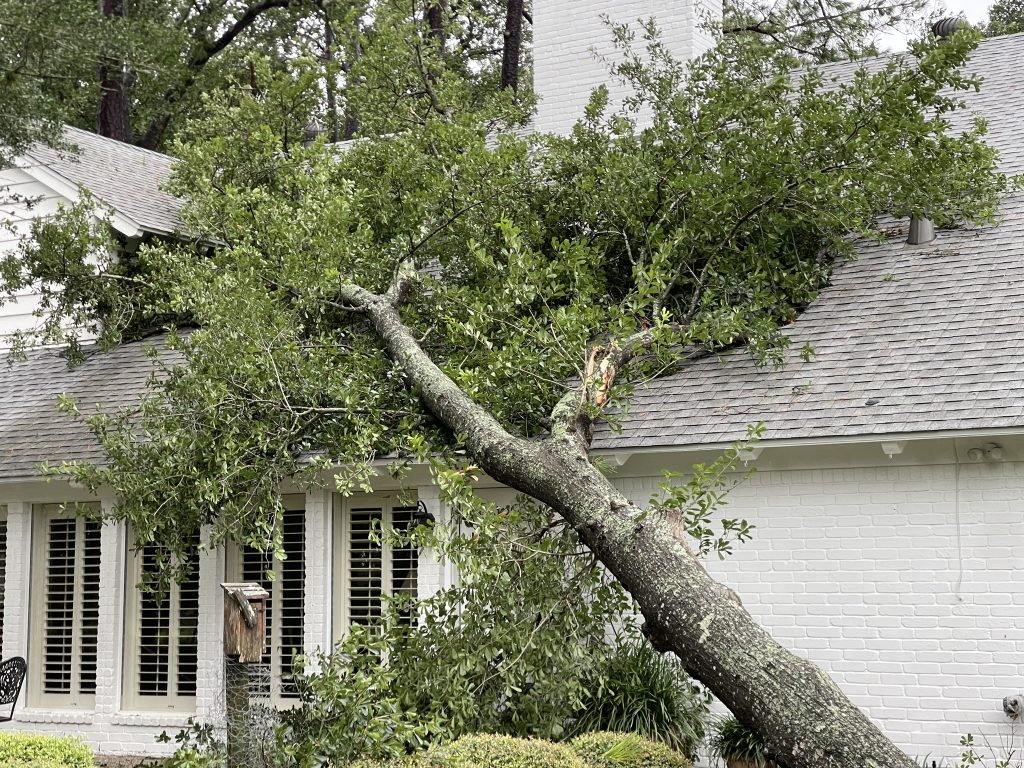
A tree or limb through the roof
Broken decking, a hole you can see sky through. Nothing else matters until it’s covered.
Shingles gone and decking showing
Wind took the shingles and the underlayment with them. Bare plywood soaks through in one rain.
An active leak with rain coming
Water in the attic or through the ceiling, and the forecast says more. The repair can’t happen on a wet roof, so the tarp goes on first.
Ridge cap stripped by wind
A bare peak leaks along its whole length. Common after hurricane wind and the straight-line storms that come up I-45.
Waiting on the adjuster
Your policy expects you to keep the damage from spreading. A tarp does that without touching the evidence, and the photos go in the claim file.
Waiting on a replacement date
Discontinued shingle, HOA approval, materials on order. The tarp holds the roof until the crew can.
Sometimes a tarp is the wrong answer. A few missing shingles on a dry, walkable roof is a same-day repair, and it costs less than tarping and coming back. We’ll say which it is when you call.
What a proper tarp job looks like
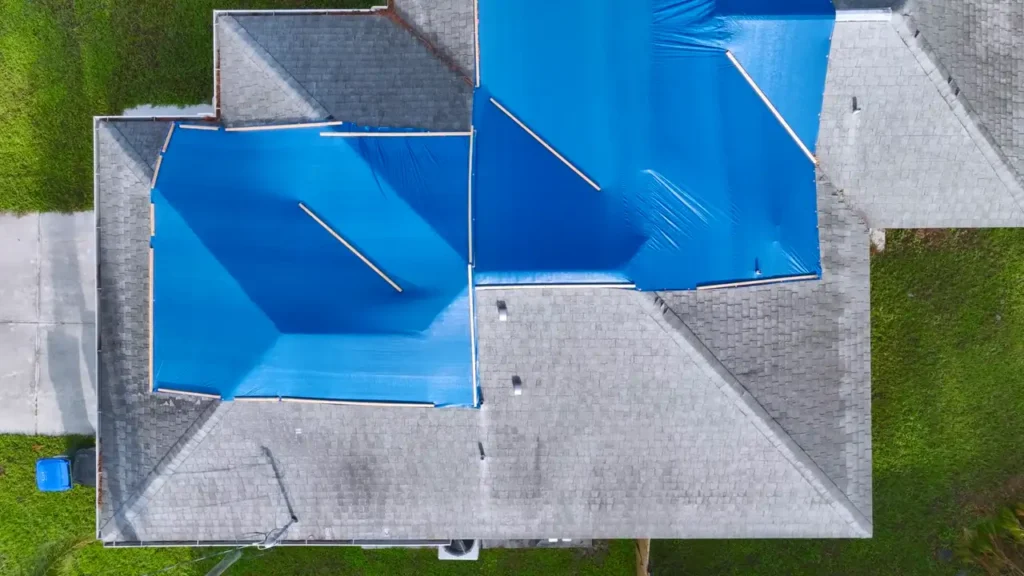
Most of the tarps you see after a storm are doing nothing. They’re held down with bricks or sandbags, which slide, and the wind gets under the loose edge and works it like a sail until the grommets tear out. Here’s how ours go on:
- Over the ridge. The top edge of the tarp goes over the peak and down the other side. If the top edge stops on the damaged slope, rain runs under it and you’ve tarped nothing.
- Fastened to battens. Each edge is rolled around a wood furring strip and the strip is screwed through the tarp into the decking, into rafters where we can find them. The wood spreads the load along the whole edge, so the tarp can’t tear at one point.
- Lapped downhill. When it takes more than one tarp, the uphill tarp goes over the downhill one, shingle-style, so water runs across the seam instead of into it.
- Holes bridged first. A tarp over an open hole ponds, sags and eventually drops into the attic. Big holes get plywood over them before the tarp does.
- Photographed before and after. Nothing gets moved or covered until it’s on camera. Adjusters need to see what the wind did, not what the tarp hides.
Yes, the screws add holes. That’s why the battens go where the repair will open the roof anyway, and why we’d rather repair once than tarp twice.
How long a tarp holds
A battened tarp rides out a normal front. What it doesn’t survive is time. Texas sun makes the material brittle after weeks, a couple of months at the outside, and every storm that passes flexes the edges a little more. Think of a tarp as a bridge to a repair date, not a season of cover. We put the repair or the inspection on the calendar the same day we tarp, and if a later storm loosens anything, you call and we come back.
What a tarp costs next to what it protects
A tarp is the cheapest thing that’s going to happen to your house this month. Wet drywall, soaked insulation that never dries, warped flooring and swollen cabinets are what a leak costs when it’s left to run, and none of that is roofing.
The repair behind the tarp is where the real money goes, and it’s not as much as people fear. Most of our repairs land between $800 and $2,000, and the most common one we do, a leaking pipe vent with rotted decking under it, runs about $1,250. That rot is what a leak does over months; a tarp keeps a small repair small. If the damage is a claim, most policies count reasonable emergency work as part of it, so keep the invoice. If the whole roof is done, replacements in the Houston area run $400 to $600 per roofing square (100 square feet) installed in 2026, our 2026 replacements have averaged just under $400 per square, and a typical 25-square home lands between $10,000 and $15,000. Financing is available, including 0% APR for up to 18 months for qualified buyers, subject to credit approval.
What to do inside the house in the meantime
- Catch the water. Buckets under the drips, towels around them, a plastic sheet over the floor. If the ceiling is bulging, put a bucket under the low spot and poke a small hole in it with a screwdriver so the water comes out in one place instead of the whole ceiling coming down at once.
- Move what you can. Furniture, rugs, electronics, anything under the stain. Wet rugs come up now; they don’t dry on a wet floor.
- Mind the electricity. If water is running near a light fixture or an outlet, turn off the breaker for that room.
- Photograph everything before you move it. The stain, the drip, the wet insulation, the furniture that got hit. Your phone dates the pictures, and the claim moves faster with them.
- Dry it out. Run the air conditioning and a fan on the wet area. In our humidity, mold starts on wet drywall within a couple of days. Wet insulation doesn’t dry; note it for the claim, and we can pull it when we do the repair.
- Keep every receipt. Fans, tarps, a dehumidifier, the plumber who checked the attic. Emergency costs go in the claim file.
What happens after the tarp
Two roads. If the damage is small, we send a written, itemized repair estimate to a portal you read on your phone, you approve it there, and the repair goes on the schedule; most are done in a day. The battens come off, the screw holes get new shingles, and every nail in the repair is set by hand, straight and flush, inside the strip the manufacturer marks, which is the difference between a patch that rides out the next front and one we’re tarping again in October.
If the damage is big enough for a claim, the tarp photos are the first page of the file. We document the roof the way adjusters need it, meet them on site, and work the scope with you; see how the claim process works. If the damage isn’t enough to claim, we tell you that too, before you file. Either way, we don’t tarp and disappear. The tarp is the first step of the repair, and the same owner who put it on prices the rest.
Straight-line wind and hail are covered on the storm damage roof repair and hail and wind damage pages.
Emergency tarping questions
How fast can you tarp my roof?
Call the number at the top of the page and tell us water is coming in; we work active leaks ahead of the regular repair schedule and tell you on the phone when we can be there. After a big storm the whole county is calling at once, so call early. In the meantime, buckets under the drips and photos of everything.
Can I tarp the roof myself?
You can, but a wet roof, a ladder and a gust of wind are how people get hurt after a storm, and a tarp weighed down with bricks usually ends up in the neighbor's yard. If you do it, run the tarp over the ridge, roll the edges around wood strips and screw those down. We'd rather you didn't climb up at all.
Will my insurance pay for the tarp?
Most homeowner policies cover reasonable emergency work that keeps the damage from getting worse, and they expect you to do it. Keep the invoice and the photos, and check your own policy wording. If the claim is approved, the tarp is normally part of it.
How long can a tarp stay on the roof?
A tarp fastened to battens over the ridge holds for weeks and sometimes a couple of months. The Texas sun makes it brittle after that, and every front that comes through works at the edges. It buys time for a repair date; it isn't a roof.
Does needing a tarp mean I need a new roof?
No. A tarp is a dry-in, not a diagnosis. Whether the roof needs a repair or a replacement is decided at the inspection, with photos, and most of the roofs we tarp get repaired.
What if only a few shingles are missing?
Then you may not need a tarp at all. A few missing shingles on a dry, walkable roof is a same-day repair, and it usually costs less than tarping and coming back. We'll tell you which one it is when you call.
Where we tarp roofs
We’re based in Spring, twenty minutes down I-45 from Conroe, and cover The Woodlands, Spring, Montgomery, Willis, Magnolia, Tomball, Cypress, Pinehurst, Huntsville and Sugar Land. After a big storm we work the calls in the order they come in and tell you on the phone where you are in the line.