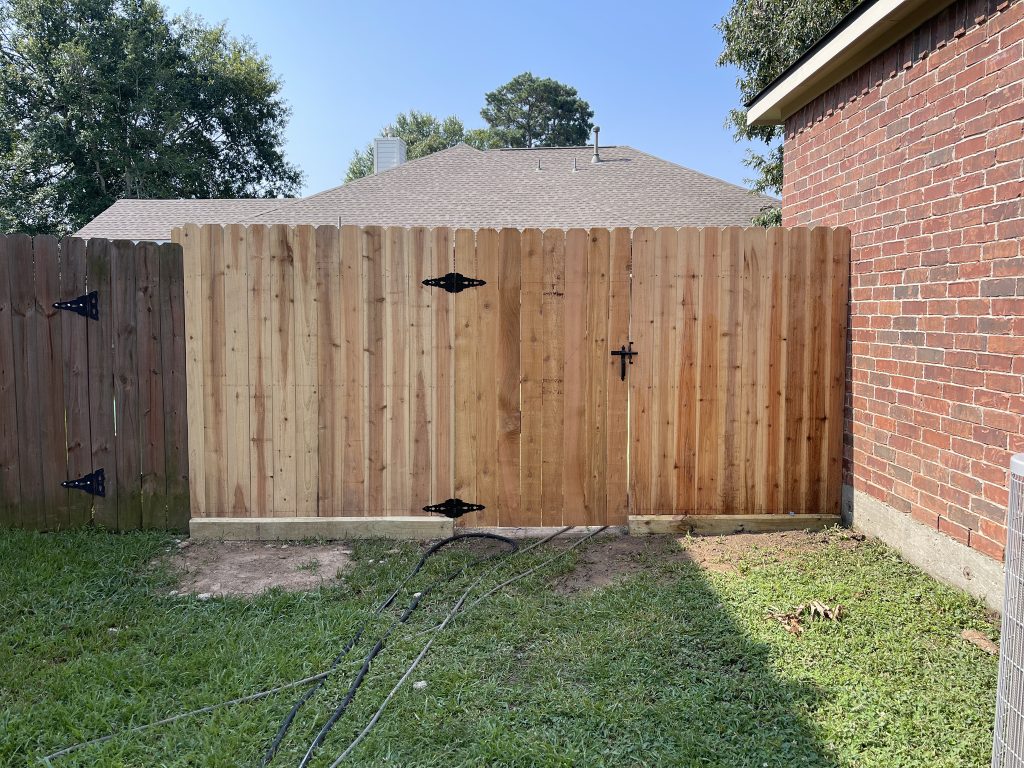
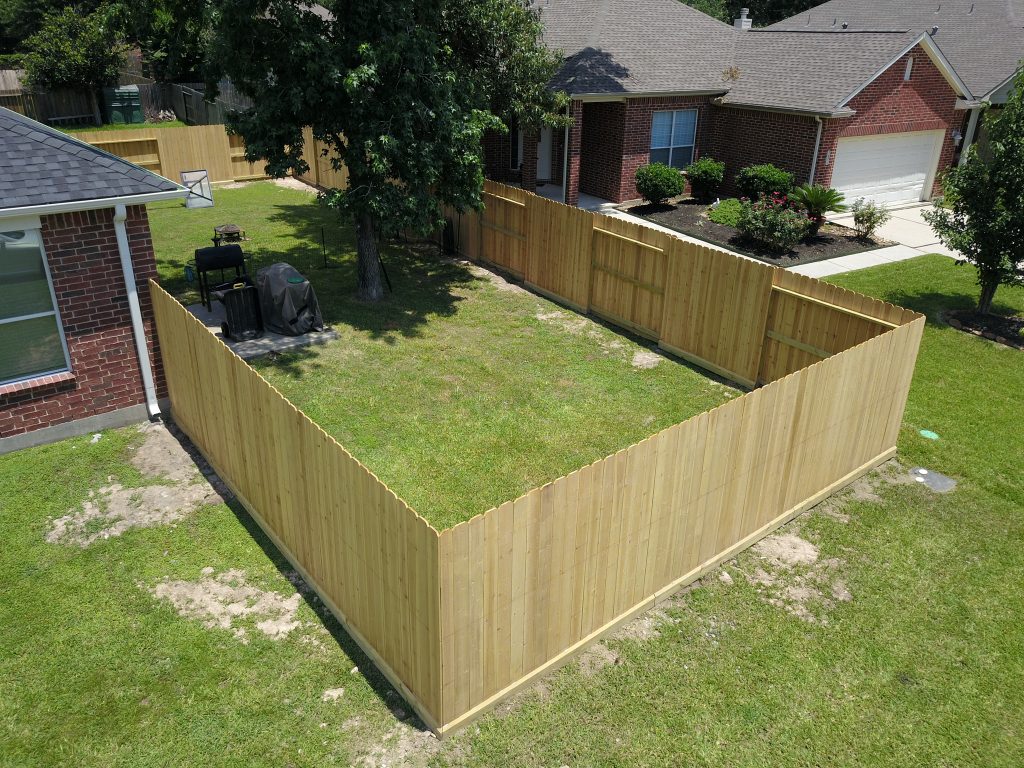
Handnail Roofing repairs and replaces wood fences in Conroe, Spring, The Woodlands and the rest of Montgomery County, mostly after the same storms that damage roofs. Andy Hughes, the owner, measures the fence line, checks which posts are still solid, and sends a written price by the linear foot. If the roof was hit too, the fence goes on the same claim and the same estimate. The inspection is free.
The wind that peels shingles off a roof pushes fences over on the same afternoon. The May 2024 derecho and Hurricane Beryl both left north Houston with roofs to patch and fence lines flat in the yard, and one adjuster handled both. That’s why a roofing company does fence work: we’re already at the house, and it belongs on one claim.
What we fix
Storm-damaged sections
Panels flattened by wind, pickets snapped by a limb, runs pulled over by a neighbor’s tree. Documented with the roof damage and rebuilt on the existing line.
Post replacement
Rotted or snapped posts dug out and replaced, wood or steel, set in concrete and crowned so water sheds away from the post.
Leaning fences
Straightened by replacing the posts that failed, not by propping the fence with a 2×4. If the pickets are done too, we say so.
Gates
Sagging, dragging or won’t latch. Hinge post reset, frame braced, adjustable hinges, latch lined up.
Rot at the bottom
Bottom rails and picket ends that have been sitting in wet grass. New rail, new rot board, pickets lifted off the ground.
Full replacement
New cedar or treated pine privacy fence on new posts, old fence hauled off, with staining as an option.
Fences and roofs go down in the same storm
A six-foot privacy fence is a sail. Straight-line wind hits it broadside, and if the posts have been rotting at the ground for a few years, they snap and the run goes flat. The same gust lifts shingles that were nailed too high, which is why a fence call after a storm usually turns into a roof inspection too. We photograph both the way adjusters need to see them, and the fence goes on the same claim as the roof: one deductible, one adjuster visit, one crew.
Two honest notes. Fences are usually covered under the other-structures part of a homeowner policy, but some policies pay them at depreciated value, so the check may not cover a full replacement. And if the fence damage alone wouldn’t clear your deductible, we’ll say so, because a claim for nothing costs you later. That’s the same standard we use for roof claims.
Cedar or pine pickets
Western red cedar resists rot and insects on its own, weighs less, stays straighter as it dries and greys to silver if you leave it alone. It costs more per picket. Treated pine costs less, arrives wet from the treatment, and shrinks and twists as the Texas sun dries it out, so a pine fence looks rougher after a year even when it’s sound. The usual answer around here is cedar pickets on treated pine posts and rails, better wood where you see it, cheaper wood where it’s hidden. Six-foot dog-ear pickets are the standard; board-on-board costs more and gives you full privacy with no gaps when the boards shrink.
Posts are where fences fail
Almost every leaning fence has the same cause: posts rotted through at the ground line, where wet soil meets air. Montgomery County clay holds water against a post for weeks after a rain, then shrinks away from it in August and loosens the concrete too. A galvanized steel post costs more up front and outlasts the pickets around it; on a fence you plan to keep for twenty years it’s usually the better buy.
Either kind goes two to three feet into the ground in concrete crowned at the top, so water runs off the post instead of sitting around it. A post set in dirt, or in concrete that cups water, fails first. When a few posts have gone, we replace those and re-hang the panels. When most have, the fence is telling you its age, and a new run on new posts is the cheaper fix over the next ten years.
Gates, bottom rails and rot
A gate sags for two reasons: the hinge post moved, or the frame racked out of square. The fix is a hinge post that doesn’t move, steel where we can, a diagonal brace or an anti-sag cable across the frame, hinges you can adjust, and a latch lined up so it closes with one hand. Rot starts at the bottom, where the lowest rail and the picket ends sit in wet grass, mulch and sprinkler spray. A rot board, a treated 2×6 run along the base, takes that wet so the pickets don’t, and it’s a cheap board to replace instead of a fence.
Staining a new fence
Stain is what keeps cedar from going silver and pine from going grey and fuzzy. A semi-transparent oil-based stain with a UV blocker every few years does more for a fence’s life than anything else you can do. New wood has to dry first: cedar for a few weeks, treated pine for longer, or the stain sits on top and peels. If you want it stained, it’s a separate line on the estimate.
What fence repair and replacement costs
Fences are priced by the linear foot, and we quote after measuring, not over the phone. The number moves with the height, the style, cedar or pine, wood or steel posts, the number of gates, tear-out and haul-off of the old fence, a rot board, stain, and access. On a storm claim we work from the adjuster’s scope and supplement it if the scope missed something. If the fence is part of a roof job, financing is available on the estimate, including 0% APR for up to 18 months for qualified buyers, subject to credit approval.
The roof comes first
If the storm took the fence, it probably lifted shingles too, and water through the roof does more damage per day than a fence lying in the yard. So we look at the roof first, tarp it if it’s open, and repair it before the fence goes back up. Our roofs are hand-nailed: every shingle set by hand, flush and inside the manufacturer’s nailing strip, because an over-driven or crooked gun nail is a shingle that lets go in the next storm. Hurricane season runs June through November, and the hurricane and wind damage pages explain what we look for. Here’s why we still hand-nail.
Fence questions we get after storms
Does homeowners insurance cover a fence blown down in a storm?
Usually, under the other-structures part of the policy, and wind is a covered cause. Fence and roof damage from the same storm go on one claim with one deductible. Some policies pay fences at depreciated value rather than replacement cost, so read that line, and we'll tell you honestly if the fence damage alone wouldn't clear the deductible.
Cedar or pine, which is better for a fence in Montgomery County?
Cedar pickets last longer and stay straighter, because the wood resists rot and bugs on its own and doesn't twist as it dries. Treated pine costs less and holds up if it's kept off the ground, but it shrinks and warps as the sun dries it. The common answer here is cedar pickets on treated pine posts and rails.
Can a leaning fence be fixed, or does it need replacing?
It depends on what's leaning. If a few posts have rotted or snapped and the pickets and rails are sound, we replace those posts in concrete and re-hang the panels. If the pickets are brittle and rotted at the bottom too, replacing the run costs less than fixing it board by board, and we'll show you the math.
Why do fence posts rot, and should I use steel posts?
A wood post rots at the ground line, where wet soil meets air, and Montgomery County clay holds water against it for weeks after a rain. Steel posts cost more but don't rot, and on a fence you plan to keep for twenty years they're usually worth it. Either way the post goes in concrete, crowned so water runs off instead of pooling around the wood.
Can you fix a sagging gate?
Yes. A gate sags because the hinge post has moved or the frame has racked out of square. We reset or replace the hinge post, brace the frame, fit adjustable hinges and line up the latch so it closes with one hand.
How much does fence repair or replacement cost?
It's priced by the linear foot and quoted after we measure, not over the phone. The number moves with height, style, cedar versus pine, wood versus steel posts, gates, tear-out of the old fence, and how hard the back fence is to reach. On a storm claim, we work from the adjuster's scope.
Where we repair fences
We’re based in Spring and repair fences wherever we roof: Conroe, The Woodlands, Spring, Magnolia, Montgomery, Willis, Tomball, Cypress, Pinehurst and Huntsville. After a big storm we work roofs first and fences right behind them, so call early.